Review Sigma 18-250 F35-63 Di 11 Vc Pzd for Nikon

In summary
Extended-range zoom lenses are designed for convenience-driven photographers who want a single, full general-purpose lens that covers a wide range of subject types without requiring them to change lenses. They also suit photographers whose budget is express. Typical users include travellers and family-orientated snapshooters.
The weather-resistant structure of the lens (see below) makes it suitable for anyone who wants to shoot in dusty or damp situations, including keen bushwalkers. But with convenience comes compromise. You lot can't expect the aforementioned resolution performance beyond the image frame equally you could get with a shorter zoom or prime lens.
If you can alive with the inevitable border and corner softening and reduced resolution at broad apertures for some focal lengths, the relatively meaty size and light weight could make it an attractive walk-effectually lens for Canon, Nikon and Sony DSLR users with 'total frame' cameras. Users of cropped-sensor cameras will detect information technology less bonny as the focal length coverage of 45-480mm (for Canon) or 42-450mm (for Nikon and Sony) could be better addressed with a pair of shorter zooms.
Full review
Announced at the CP+ show in Nippon in Feb, the Tamron 28-300mm f/3.v-six.iii Di VC PZD (Model A010E) lens initially went on sale late in June. Replacing the previous model (A20), the new lens is smaller and lighter, thanks to a new mechanical design with a multi-stack-cam layout that takes up less space and a piezo-electric AF drive that is faster, quieter and more accurate.
The Tamron 28-300mm f/3.5-six.three Di VC PZD, shown without end caps and lens hood. (Source: Tamron.)
The optical pattern of this lens has likewise been improved. The lens features 19 elements in 15 groups and includes four elements made from LD (Low Dispersion) drinking glass, three Moulded-Drinking glass Aspherical elements, i Hybrid Aspherical element, one XR (Extra Refractive Index) glass element and ane chemical element of UXR (Ultra-Extra Refractive Alphabetize) glass, which has greater refractive index than XR.

The optical diagram for the 28-300mm f/iii.5-6.3 Di VC PZD lens showing the positions of the exotic elements. (Source: Tamron.)
These specialised glass elements assistance to reduce the size and weight of the lens. They also provide better correction for chromatic aberration specially at longer focal lengths. The application of BBAR (Broad-Band Anti-Reflection) coatings suppress internal reflections, minimising ghosting and flare.
The lens is supplied with front and end caps plus a 'flower-shaped' lens hood that reverses over the lens barrel for like shooting fish in a barrel storage. The front end of the lens is threaded to accept 67 mm diameter filters.
Who's it for?
Extended-range zoom lenses are designed for convenience-driven photographers who want a single, general-purpose lens that covers a broad range of subject types without requiring them to change lenses. They as well conform photographers whose upkeep is limited. Typical users include travellers and family-orientated snapshooters.
The weather-resistant structure of the lens (see below) makes it suitable for anyone who wants to shoot in dusty or damp situations, including keen bushwalkers. But with convenience comes compromise. You lot tin't await the same resolution operation across the image frame as you could get with a shorter zoom or prime lens.
If y'all tin live with the inevitable edge and corner softening and reduced resolution at wide apertures for some focal lengths, the relatively compact size and light weight could make it an attractive walk-effectually lens for Canon, Nikon and Sony DSLR users with 'full frame' cameras. Users of cropped-sensor cameras will find it less attractive as the focal length coverage of 45-480mm (for Canon) or 42-450mm (for Nikon and Sony) could be better addressed with a pair of shorter zooms.
Build and Ergonomics
Build quality is generally skilful and similar to the cheaper Tamron 16-300mm f/three.five-6.3 Di II VC PZD Macro lens for DSLRs with APS-C sized sensors, which nosotros reviewed recently. Like that lens, the 28-300mm Di lens has a thin rubber gasket around the lens mountain, providing wet-resistant construction.
Both lenses are similar in size and weight, but the optical blueprint of the 28-300mm Di lens is more than complex than the sixteen-300mm Di 2. Going on overall build quality, it's hard to run into this difference accounting for the $300 difference in the prices of these lenses.
Like the 16-300mm Di II, the 28-300mm Di lens contains a high per centum of 'Applied science' quality polycarbonate plastic in its construction. Tamron has developed special methods for incorporating these materials in critical mechanical components, where they tin maintain dimensional stability under tough conditions.
The matte finish on the outer butt has become standard in recently-released lenses. Without the lens cap, the lens extends but over 100 mm from the camera body in the 28mm position, with a pair of inner barrels extending by roughly 80 mm when the lens is zoomed to 300mm. Attaching the lens hood bring the overall length to 215 mm at this focal length.
The zoom band is nearly 12 mm behind the front of the lens when it's in the 28mm position. It'south approximately xxx mm wide with the leading 24 mm section clad with a deeply-ridged safety grip ring.
Stamped on the abaft edge of the zoom ring are vii focal length settings: 28, 35, l, 70, 100, 200 and 300mm. Roughly a quarter of a turn spans the entire zoom range.
A zoom lock is set into the outer barrel in the aforementioned section every bit the focal length settings a little to the right of the 28mm marker. We found no instances of zoom creep while using the lens but the lock could be handy for preventing the lens from extending accidentally when it's removed from a camera pocketbook.
A distance scale is set into the outer barrel just behind the zoom band. It's covered by transparent window and calibrated in metres and feet, ranging from the closest focusing distance of 49 cm to infinity.
The focusing ring lies behind the distance calibration, separated from it by a narrow cosmetic band of 'tungsten silver' that carries the name of the manufacturer and the lens. The focusing ring is 10 mm wide and fully clad with a ridged safe grip ring. It can be turned through 360 degrees.
Focusing is fully internal and the front of the lens doesn't rotate during focusing or zooming, enabling users to fit angle-disquisitional filters like polarisers and graduates. Both rings turn smoothly and are well damped, which makes fine adjustments easy. Transmission focusing is disabled when the lens is prepare to AF mode.
Behind the focusing band the lens angles gently inward towards the mounting plate. Around the left hand side of this section are 2 slider switches, the upper one with AF and MF positions and the lower 1 for switching the VC stabilisation on and off.
The lens hood was easy to adhere and remove and appeared to work well, preserving prototype dissimilarity and colour vibrancy in shots taken with extreme backlighting. The compression-clipped lens cap wasn't quite such a good fit and proved easy to dislodge when the hood was inverted over the lens barrel.
The lens was a comfortable fit on the two cameras nosotros used for our tests: the 'total frame' EOS 5D Mark II and the ingather-sensor EOS 7D. Since it is designed primarily for 'total frame' cameras, nosotros didn't use it on a lighter, entry-level torso.
Operation
Out of interest we ran Imatest tests with both the EOS 5D Mark II and EOS 7D cameras, producing results that were much as nosotros had anticipated. In terms of centre resolution, Imatest showed the review lens to be an adequate performer, although the results of our tests were never annihilation like as good as those nosotros obtained with the 16-300mm f/3.5-half-dozen.three Di II VC PZD Macro lens.
Differences in edge resolution were quite significant, with the 7D yielding higher figures than the 5D Marker Two. This is to exist expected since the camera with the smaller sensor records data only from the center of the frame, effectively 'cropping' off the edges and corners of the frame. The graphs below show the results from our Imatest tests for both cameras.

EOS 5D Marker II.

EOS 7D. (Note: we were unable to exam the lens at a longer focal length due to a lack of space in our testing set up-up.)
Subjective assessments of exam shots confirmed these findings; edge softening was mutual at all focal lengths for both camera bodies simply specially at wider apertures and greater with the 'full frame' camera. The heart of prototype frames from the EOS 5D Mark Ii too lacked the definition the 16-300mm lens provided at the 35mm and 50mm focal lengths. (Sample crops are provided beneath to illustrate this indicate.)
Lateral chromatic aberration was similar with both cameras (which is likewise to be expected), although marginally lower with the EOS 5D Marking 2. Coloured fringing was just visible most the edges of tests shots when they were enlarged substantially; otherwise edge and corner softening could have obscured whatever slight fringing that may have been present.
With both cameras, our Imatest results ranged betwixt the upper levels of the 'negligible' ring to the lower third of the 'low' band. In the graphs of our test results below, the ruby line separates the negligible and low bands, while the green line marks the edge of the moderate ring.

EOS 5D Mark II.

EOS 7D.
Butt distortion could be seen with the 28mm focal length with the EOS 5D Marker 2. This had inverse to slight pincushioning past 50mm but we noticed no meaning increment in pincushion distortion across the remaining focal lengths.
Vignetting was obvious at the widest aperture settings throughout the zoom range with the EOS 5D Mark Two but largely resolved by stopping the lens down ii f-stops. Most modern cameras provide in-camera corrections for baloney and vignetting so neither aberration represents a significant issue.
Backlit subjects were generally handled well and dissimilarity was maintained to an acceptable level in most of our exam shots. The only instances of veiling flare nosotros found were at the longest focal lengths, where it was relatively slight.
Autofocusing was as quiet and authentic as we expected from the piezo-electrical AF bulldoze and as well reasonably fast (though not exceptionally so). It was also capable of tracking moving subjects, although not very fast movement.
Manual focusing was more often than not like shooting fish in a barrel for both directly manual command using the focusing band and manual over-ride for AF. Nosotros found picayune or no interference in soundtracks from either the focusing or zooming movements when recording movie clips.
With a minimum focusing distance of close to fifty cm, this lens can only be useful for close-ups at longer focal lengths. Bokeh was much as you'd expect from an extended range zoom lens, equally shown in the sample images below.
The relatively pocket-size maximum apertures, particularly at longer focal lengths, made information technology difficult to mistiness-out background details and strong contrasts in backgrounds produced some choppiness and outlining in out-of-focus areas. When background dissimilarity was low, bokeh could be smoothly rendered.
SPECS
Picture angle: 75 °23′""8 °15′ (for full-frame format); 52 °58′""five °xx′ (for APS-C format)
Minimum aperture: f/22″"f/forty (28mm""300mm)
Lens construction: 19 elements in fifteen groups (including ane hybrid aspherical, 3 moulded-glass aspherical, iv LD, i XR and ane UXR lens elements)
Lens mounts: Canon, Nikon and Sony
Diaphragm Blades: 7 (circular discontinuity)
Focus drive: PZD (Piezo Bulldoze)
Stabilisation: VC (Vibration Compensation), except Sony mount
Minimum focus: 49 cm
Maximum magnification: ane:iii.five (at f=300mm, MOD=0.49m)
Filter size: 67 mm
Dimensions (Diameter x L): 74.4 x 96 mm
Weight: 540 grams
Supplied accessories: Blossom-shaped Lens Hood, front and end caps
TESTS
IMATEST GRAPHS
(based on JPEG files from the Canon EOS 5D Mark 2)
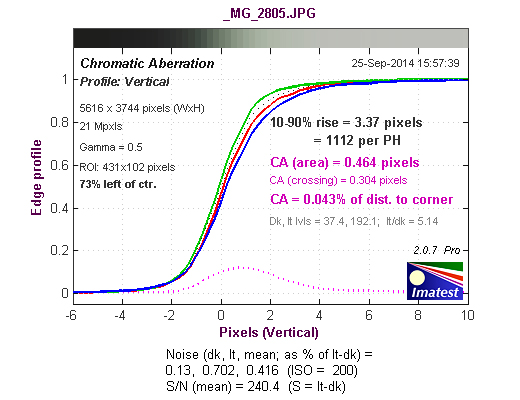


(based on JPEG files from the Canon EOS 7D)


SAMPLES
The images below were captured as raw files with the Canon EOS 5D Mark II.

Vignetting at 28mm f/3.v.

Vignetting at 50mm f/3.five.

Vignetting at 100mm f/3.v.

Vignetting at 300mm f/half-dozen.3.
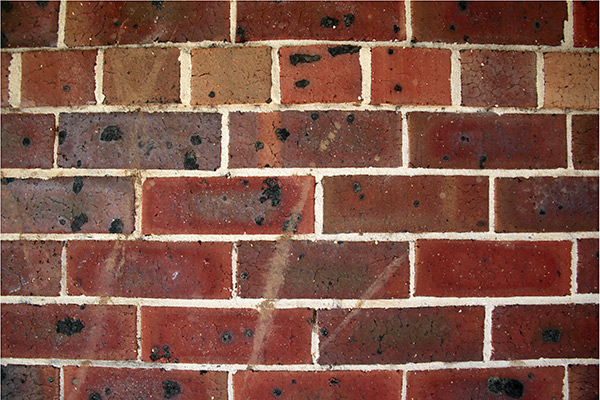
Rectilinear baloney at 28mm.

Rectilinear distortion at 50mm.

Rectilinear distortion at 100mm.

Rectilinear distortion at 300mm.
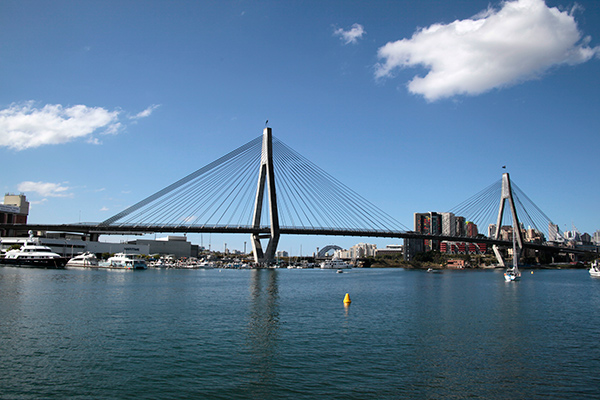
28mm focal length; ISO 200,1/640 2d at f/ix.

300mm focal length; ISO 200,1/500 2d at f/9.

28mm focal length; ISO 200,1/640 2nd at f/9.

Crop from the centre of the above prototype at 100% magnification.

Crop from the left hand edge of the in a higher place image at 100% magnification.

Crop from the right hand edge of the in a higher place image at 100% magnification.

300mm focal length; ISO 200,1/320 2d at f/7.i.

Crop from the heart of the above epitome at 100% magnification.

Crop from the left paw edge of the above image at 100% magnification.

Crop from the corner of the in a higher place paradigm at 100% magnification.

83mm focal length; ISO 200,i/320 second at f/10.

Crop from the above paradigm at 100% magnification showing no apparent coloured fringing simply noticeable softening.

Very choppy bokeh resulting from large contrast differences in the background; 116mm focal length; ISO 200,ane/160 2nd at f/5.6.
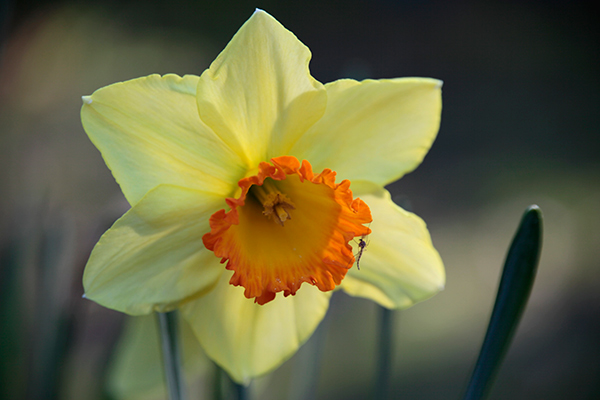
Smooth bokeh in a shut-up shot taken with the 300mm focal length; ISO 200,1/100 2nd at f/6.iii.

Very potent backlighting with minimal flare, despite the presence of a bright light source within the frame; 35mm focal length; ISO 200,one/250 2nd at f/10.

Veiling flare at the 300mm focal length with the brilliant lite source just outside the image frame; ISO 200,one/yard 2nd at f/11.

200mm focal length; ISO 200,ane/250 2nd at f/6.3.

89mm focal length; ISO 200,one/lxxx second at f/seven.1.

300mm focal length; ISO 200,1/125 2nd at f/9.

154mm focal length; ISO 200,1/200 second at f/8.

288mm focal length; ISO 200,i/400 second at f/7.1.

30mm focal length; ISO 400,1/400 second at f/11.
Rating
RRP: AU$1149; United states$999
- Build: 9.0
- Treatment: viii.eight
- Paradigm quality: 8.2
- Versatility: eight.8
Purchase
Source: https://www.photoreview.com.au/reviews/lenses/full-frame/tamron-28-300mm-f35-63-di-vc-pzd-lens/
0 Response to "Review Sigma 18-250 F35-63 Di 11 Vc Pzd for Nikon"
Postar um comentário